
CALL OR TEXT US NOW
630-426-0196

4 Ways to Revoke a Will in Illinois
 There is usually minimal legal risk in making a will. You can revoke it at any time as long as you are competent to do so. People choose to revoke and replace their wills for many reasons. A divorce or remarriage often makes an old will outdated, especially if it still leaves everything to a former spouse. The arrival of a child or grandchild is another common reason to update an estate plan so that new family members are included.
Sometimes, priorities simply shift over time, and you may no longer wish to leave certain assets to the same people or organizations you previously wanted to. Whatever the reason, revoking an old will and creating a new one is usually a straightforward process with the right legal guidance. It is best to consult our Lombard, IL estate planning lawyers to make sure that your revocation is legally enforceable.
Revoking a Will by Destroying It in Illinois
Physically destroying your will is one way to revoke it under Illinois law. You can shred it, burn it, tear it up, or mark through it so that it can no longer be read. Once destroyed, the will is legally invalid. However, this method can cause problems if there is confusion about whether the destruction was intentional. For example, if your will goes missing, your family might argue about whether you destroyed it on purpose or if it was simply lost.
You can also sign a written, properly witnessed statement confirming that your intent was to revoke the will through destruction. This extra step can prevent disputes later. Because questions of intent can lead to family conflicts or even court challenges, it is best to involve an attorney in the process. A lawyer can confirm that your revocation is valid and help you create a replacement plan, such as a new will or trust, so your wishes are still carried out after your death.
Making a New Will To Cancel the Old One in Illinois
In Illinois, when you create a new will that conflicts with an older one, the new document automatically cancels the old version. Under 755 ILCS 5/4-3, a will must be properly signed and witnessed to be valid. If your new will meets those requirements, it takes legal priority over your earlier one.
This method is simple and clear. By writing a new will, you are showing your intent to replace the old one. Still, your new will must be carefully prepared. Even small errors can cause problems. Unclear wording or missing witnesses may be enough to make the document invalid. That could accidentally bring your old will back into effect.
Working with an estate planning lawyer is the best way to avoid mistakes. Your attorney can ensure that your new will includes everything your previous one did, plus any updates. They can also safely store copies, so your family knows which version is final. This prevents old drafts from resurfacing and helps ensure that your wishes are followed exactly as you planned.
Adding a Clause to a New Will To Revoke the Old One
Adding a revocation clause to your new will is one of the most secure ways to make sure your old will no longer applies. A revocation clause is a short statement that clearly says all prior wills are revoked. This language removes any doubt about which document should be followed after your death.
Most lawyers automatically include a revocation clause when drafting a new will. You still want to confirm that the clause is not only there but correctly worded. When you combine this method with the creation of a new, properly executed will, you add a strong layer of protection against future disputes. If your estate is complex or your family situation has changed, using a revocation clause ensures a clean transition from your old will to your new one.
Revoke a Will With a Separate Revocation Document
You can revoke your will by signing a separate written statement that specifically says you are canceling it. This is called a "stand-alone revocation." It is often used by people who no longer want a will because they have created a living trust or another type of estate plan. A stand-alone revocation is especially useful if you want a formal, legally recognized way to end an old will without having to destroy it. In Illinois, a stand-alone revocation must be executed with the same formalities as a will, meaning it must be signed and properly witnessed.
What Happens if You Do Not Properly Revoke Your Old Will in Illinois?
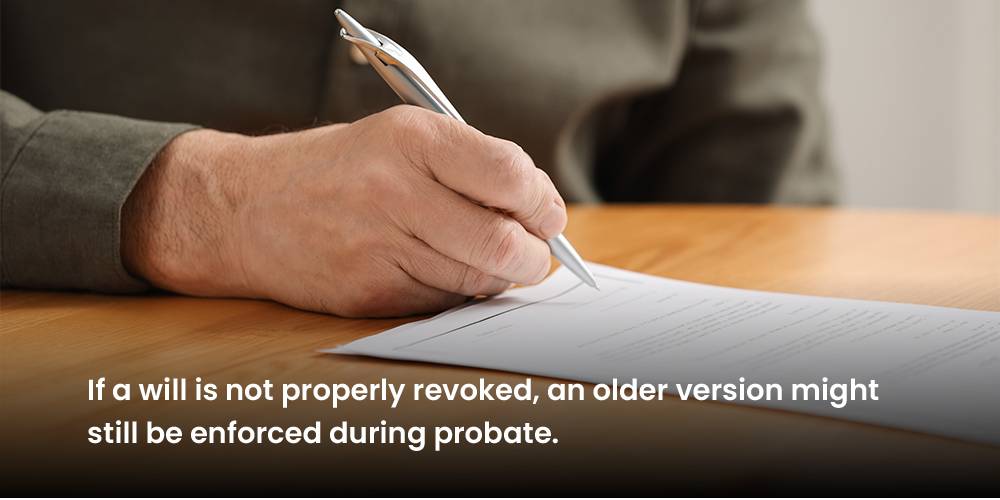
If your old will is not clearly revoked, it could still be enforced during probate. The probate process is where a court reviews and validates your will, settles debts, and distributes your assets to beneficiaries. Illinois courts look for clear evidence that you intended to cancel your previous will. Family disputes and confusion over multiple versions of your will are not the only potential issues. Failing to properly revoke an old will can also result in the following:
-
Costly and time-consuming probate proceedings as the court works to determine which will is legally valid
-
Unintended asset distribution, where property goes to the wrong person or charity because the old will is mistakenly enforced
-
Delays in settling your estate that can leave loved ones waiting months or even years for resolution
-
Risk of partial or conflicting distributions, where some assets follow the old will and others follow the new one, creating inconsistent outcomes that are difficult for the court to resolve
To avoid these outcomes, store your new documents securely and tell your executor or attorney where to find them.
Call a DuPage County, IL Estate Planning Lawyer
For help revoking a will or updating your estate plan, contact A. Traub & Associates today. With more than 20 years of experience serving clients in Lombard and the surrounding communities, our attorneys can ensure your wishes are clearly documented and legally protected. We can guide you through every step of canceling an old will, drafting a new one, or creating a trust that fits your goals. Call 630-426-0196 to schedule your consultation with our Lombard, IL estate planning lawyers today.
Work with Our Team
& Get Started Today
To get in contact with a member of our team, call or text us at 630-426-0196
or fill out and submit the contact form below.
 The use of the Internet or this form for communication with the firm or any individual member of the firm does not establish an attorney-client relationship. Confidential or time-sensitive information should not be sent through this form.
I have read and understand the Disclaimer and Privacy Policy.
Lombard
200 W. 22nd Street, Suite 210
Lombard, IL 60148
P 630-426-0196
MAP + DIRECTIONS
Arlington Heights
634 S. Arthur Avenue
Arlington Heights, IL 60005
P 847-749-4182
MAP + DIRECTIONS

LEAVE US A REVIEW
200 W. 22nd Street, Suite 210
Lombard, IL 60148






Apply Now!
Please submit your resume in PDF format via e-mail: hello@atclaw.com.
Your application should include your resume and a cover letter. Our team reviews all submissions from potential candidates, and we will respond to your email as quickly as possible. If you have any questions about the position or the submission of your resume, please send us an email using the link above.
