
CALL OR TEXT US NOW
630-426-0196

Reasons Why a Parent Might Refuse to Pay Child Support in Illinois
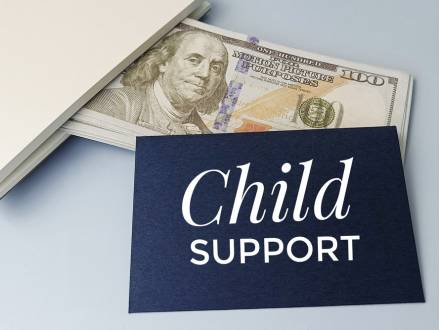
When parents get a divorce, they are still responsible for taking care of their children. Child support is one way parents share financial responsibility for their child after a separation or divorce. However, some parents may refuse to pay support in deliberate violation of the judge’s orders.
At A. Traub & Associates, our Schaumburg, IL family law attorneys are here to help you enforce your child’s rights to support. We provide clients with personalized service, looking at each client’s specific situation before taking decisive action.
How Is Child Support Determined in 2026?
When child support is calculated in Illinois, both parents’ net incomes are considered using an "income shares" model. The court looks at the parents’ combined net income and the number of children to find the basic support amount. Each parent’s share is then based on his or her percentage of the combined net income. Parenting time can also affect the calculation. The receiving parent’s share is assumed to be spent directly on the child. Child support helps cover the child’s everyday needs, and the court can also order parents to share certain medical, school, extracurricular, and child care expenses.
Why Might a Parent Refuse to Pay Child Support?
Decisions about child support and parental responsibilities are made in the best interests of the child. Still, the parent ordered to pay may fall behind or refuse to pay altogether. Unless the child support order is changed, a parent should continue making the required payments. Common reasons for missed payments can include:
Financial Disagreements
Child support is to be used for the child, but parents may disagree on how exactly the funds are spent. The supporting parent may think that his or her money is being spent carelessly or poorly. For example, the custodial parent may decide that the child will purchase lunch at school, while the supporting parent might prefer to save money by bringing lunch from home.
However, the paying parent cannot withhold court-ordered child support because of a disagreement about how this support is used. If there is a concern that the child’s needs are not being properly met after receiving child support, the paying parent should speak to an attorney to determine how to proceed.
Lack of Finances
A parent may not be paying child support because he or she does not have the funds for it. Financial status may change due to the loss of a job or other sources of income after a child support order has been issued. Generally, the parent seeking the modification has the burden to prove there has been a "substantial change in circumstances" (750 ILCS 5/510).
If this is the case, the paying parent should speak to an attorney to determine the options for modifying the child support order. Failing to pay child support can result in serious consequences, and regardless of the reasons for non-payment, a parent will be required to pay any overdue support.
Hard Feelings
If a parent believes he or she does not get enough time with his or her child, he or she may be reluctant to make child support payments. However, withholding money never benefits the child. Harboring a vendetta toward the other parent and trying to get back at him or her by withholding child support can not only hurt the child but also lead to serious legal consequences.
Does Unpaid Child Support Accumulate Interest in Illinois?
Unpaid child support can grow larger over time. Illinois sets the interest rate on past-due support at nine percent per year. The interest is calculated each month against the unpaid balance. A debt that sits untouched can climb well above the original amount.
Since January 1, 2021, cases handled by Illinois Child Support Services follow different rules for adding interest. Interest is no longer added automatically in every case. A parent must meet certain requirements and request that the interest be calculated and enforced. Strict deadlines apply to these requests. A family law attorney can review your payment history and explain whether interest can be added to the balance you are owed.
What Happens to Child Support Debts After a Child Turns 18?
Current child support usually ends when a child turns 18. If the child is still in high school, payments can continue until graduation or the child's 19th birthday, whichever comes first. Some orders run longer than that. For example, Illinois law also allows support for some non-minor children with disabilities and allows courts to order parents to contribute to certain college expenses.
Reaching the end date does not erase what is already owed. Past-due support remains a debt after the order stops. A parent can still be pursued for that balance years after the youngest child becomes an adult. Moving to another state does not cancel the debt either. Collection efforts often continue until the full amount is paid off.
How Can the Court Enforce Unpaid Child Support?
A parent who is owed support can ask the court or Illinois Child Support Services for help. Depending on the case, they have several enforcement methods to collect the debt. Income withholding pulls payments directly from a paycheck. The court can place a lien on property, order money taken from a bank account, or intercept a state or federal tax refund. Driver's licenses and professional licenses can be suspended. In some cases, a parent can even lose his or her passport for unpaid support.
A judge can also hold a parent in contempt for willfully refusing to pay. Penalties can include fines, a court-ordered payment schedule, and jail time in serious situations. Illinois law treats some cases of willful non-payment as a criminal offense.
Missed support payments affect a child's housing, food, school costs, and medical care. Our firm helps parents who are trying to collect what they are owed, as well as parents who need an order corrected.
Contact a Schaumburg, IL Child Support Lawyer
When one parent fails to pay court-ordered child support, the child can suffer financially. If your ex-spouse refuses to make child support payments or does not pay them on time, contact our experienced and dedicated Rolling Meadows, IL family law attorneys. A. Traub & Associates will advocate for the financial help your child needs to thrive. Call our office today at 630-426-0196 to schedule an initial consultation.
Work with Our Team
& Get Started Today
To get in contact with a member of our team, call or text us at 630-426-0196
or fill out and submit the contact form below.
 The use of the Internet or this form for communication with the firm or any individual member of the firm does not establish an attorney-client relationship. Confidential or time-sensitive information should not be sent through this form.
I have read and understand the Disclaimer and Privacy Policy.
Lombard
200 W. 22nd Street, Suite 210
Lombard, IL 60148
P 630-426-0196
MAP + DIRECTIONS
Arlington Heights
634 S. Arthur Avenue
Arlington Heights, IL 60005
P 847-749-4182
MAP + DIRECTIONS

LEAVE US A REVIEW
200 W. 22nd Street, Suite 210
Lombard, IL 60148






Apply Now!
Please submit your resume in PDF format via e-mail: hello@atclaw.com.
Your application should include your resume and a cover letter. Our team reviews all submissions from potential candidates, and we will respond to your email as quickly as possible. If you have any questions about the position or the submission of your resume, please send us an email using the link above.
